
Our flagship service
Builders Cleaning Melbourne
Builders cleaning in Melbourne, for the people who have to hand a building over: builders, developers, site managers and fitout contractors. We handle all three visits, from the first rough clean through the detailed practical completion pass to the final handover clean, on houses, townhouses, apartment floors, offices and shops, each one booked against your programme and signed off with your site manager. Cleaningia is a Melbourne cleaning company built around deadline work, and this is the job we do most.
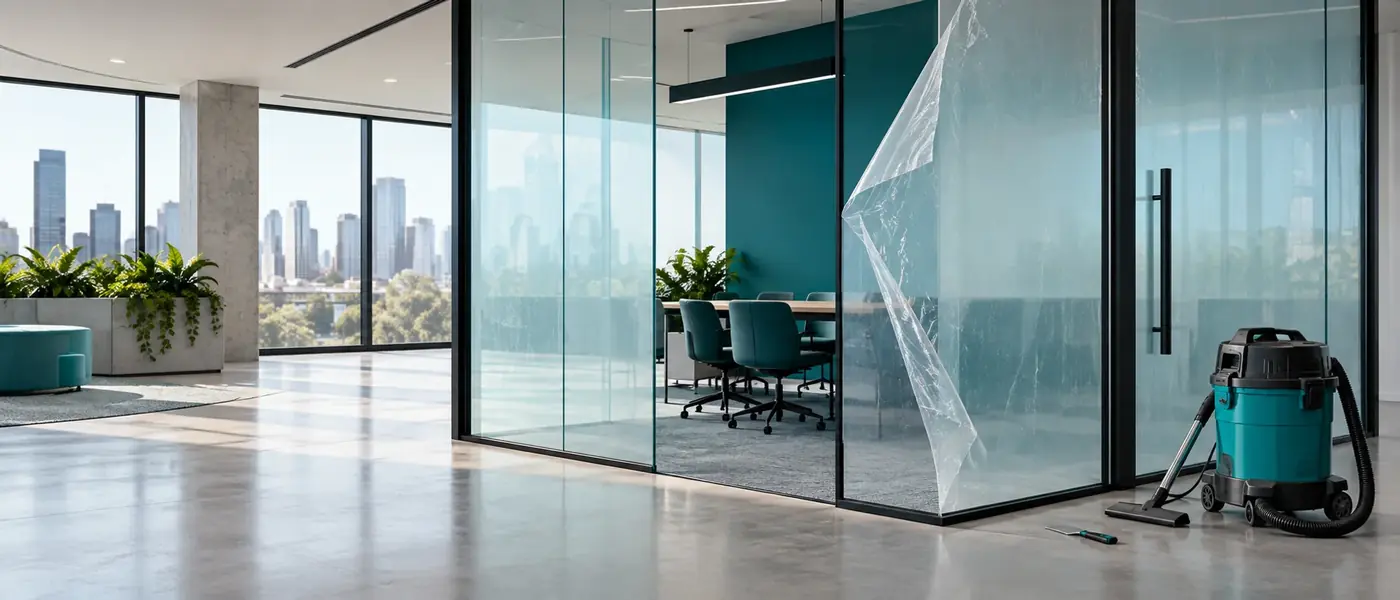
A building can be finished and still not be ready. The joinery is in, the paint is dry and the defects are fixed, yet every surface carries a film of plaster and sanding dust, the windows are streaked with overspray and the floors are scuffed from a month of boots. That gap between "built" and "ready" is what a builders clean closes, and it is the part of a project most likely to be squeezed when the programme runs late.
Our builders cleaning covers residential and commercial work. On the residential side that means new houses, townhouse developments, apartment buildings and larger renovations handed back by the builder. On the commercial side it means office fitouts, retail shells, showrooms, and new buildings where floors are handed over one at a time. The stages are the same; the scale, the access and the paperwork are what change.
Stage by stage
How does builders cleaning in Melbourne run, stage by stage?
Builders cleaning in Melbourne usually runs in three visits. The rough clean clears bulk mess once the heavy trades leave, the practical completion clean details every surface before inspection, and the final clean removes the last dust just before the keys change hands. Smaller jobs can combine the first two.
| Mess | Rough clean | Practical completion | Final clean |
|---|---|---|---|
| Offcuts, packaging and debris | ✓yes | ·no | ·no |
| Heavy plaster and sanding dust | ✓yes | ✓yes | ·no |
| Concrete splatter and mortar | ✓yes | ✓yes | ·no |
| Paint overspray and adhesive | ·no | ✓yes | ·no |
| Silicone smears, labels and film | ·no | ✓yes | ·no |
| Fine settled dust | ·no | ✓yes | ✓yes |
| Glass, floors and touch points | ·no | ✓yes | ✓yes |
| Build | Usual stages | Where the time goes | Watch for |
|---|---|---|---|
| New house or townhouse | Rough and final, sometimes combined | Kitchens, bathrooms, window tracks and glass | Paint on stone benchtops, render dust on sills |
| Apartment building | All three, floor by floor | Repetition across units, lift and loading access | Balcony glass, common areas, lift protection |
| Office or retail fitout | Practical completion and final, often overnight | Glass partitions, ceiling grilles, joinery | Tenant move-in dates, after-hours building rules |
Why three visits instead of one big clean at the end? Because dust keeps coming. Every trade that works after a clean puts some of it back, so cleaning too thoroughly too early wastes money. Staging the work means each visit only does what will survive until handover. For a plain-English walk through the stages and a printable list, see our guide what is a builders clean.
What happens in the rough clean?
The rough clean, sometimes called the initial or first-fix clean, clears the bulk of the construction mess once the heavy trades have finished. Debris and packaging go, floors are vacuumed, heavy dust comes off ledges, and the site becomes safe and readable for the finishing trades.
It is the least glamorous visit and one of the most useful. A clear floor lets the painters see what they are doing, lets the flooring installers lay onto a clean slab, and lets anyone walking the site spot real defects instead of dust. On a live site it also cuts trip hazards, which your site safety plan will thank you for.
You will also see it quoted as a "builders initial and final clean" on smaller residential jobs, where the rough and practical completion visits are rolled into one initial clean, followed by the final. That works well on a single house with a short fit-off period. On anything bigger, keeping the stages separate usually costs less overall.
We use HEPA-filtered vacuums rather than brooms wherever we can, because sweeping plaster dust just moves it into the air and back onto the walls. Concrete splatter and mortar on floors, frames and sills is scraped back while it is still easy to lift, before it has months to cure.
Waste is worth sorting out before we arrive. We bag and take away our own cleaning waste, but construction debris belongs in the builder's skip or waste cage, so we ask where it is and whether there is room. If your site has no skip, mention it on the quote request; bagging and removal then appear as their own line in the price.
Rough clean at a glance
- When
- After lock-up and the heavy internal trades, before painting and floor finishes
- Removes
- Offcuts, packaging, bulk dust, splatter, trade rubbish inside the building
- Leaves
- Fine dust and residue that later trades will add to anyway
- We need
- A skip or waste point for debris, power on the floor, clear access
Practical completion clean at a glance
- When
- After painting, fit-off and floor finishes, before the PC or defects inspection
- Removes
- Overspray, adhesive, silicone smears, labels, protective film, fine dust
- Covers
- Joinery inside and out, glass and frames, fittings, switches, vents, wet areas
- We need
- The finishes schedule, so we use the right product on each surface
What does a practical completion clean involve?
A practical completion clean is the detailed pass that gets a building ready for inspection. Anything the client is likely to touch, open or run a finger along gets cleaned, and the residue left by painters, tilers and installers is removed without scratching new stone, glass, timber or powder coat.
This is where product knowledge matters. Paint on glass comes off with a sharp blade held flat and plenty of lubricant; paint on anodised aluminium does not, and a blade there leaves marks that end up on the defect list. Stone benchtops, matt tiles and timber veneers each have cleaners they tolerate and cleaners that stain them, so we ask for the finishes schedule before we start.
Inside joinery gets the same attention as outside it. Drawers, runners, hinges and cupboard bases collect sawdust, and an inspector opening a drawer is exactly when you don't want to see it. Light fittings, switch plates, vents and door hardware are wiped, and wet areas are detailed ready for first use.
Protective film is a small thing that causes big arguments. Left on too long in the sun, the film on window frames and appliances bakes on and leaves adhesive behind. We peel it during this visit wherever the trades are finished with the surface, remove any residue with a product suited to the finish, and leave film in place only where you ask us to.
What is a final or handover clean?
A final clean, also called a builders final clean or handover clean, is the last visit before the keys change hands. It removes the dust stirred up by defect repairs, finishes the floors, cleans the glass, and ends with a walk-through against your handover list.
Timing is everything here. Book it too early and the electrician fixing a last light puts dust back on the benches. Book it too late and there is no room left if something is picked up. The sweet spot is after the defects are closed out and before the client walk, with a gap of a day in between.
The walk-through at the end is the part we care about most. The supervisor walks the site with your site manager, room by room, and anything raised is fixed before the crew leaves. You get the signed list and photos, which is useful if a question comes up after handover.
Inspectors and clients look in the same places, so we do too: the top of door frames and joinery, skirting boards, window tracks and sills, light diffusers, the inside of the first kitchen drawer, the shower screen in the main bathroom, and the glass by the front door where the light shows every streak.
Final clean at a glance
- When
- After defects are closed out, a day or so before the client walk
- Removes
- Fine dust from repairs, fingerprints, streaks, anything left from earlier stages
- Finishes
- Floors mopped, buffed or sealed to suit; internal and reachable external glass
- Ends with
- A walk-through against your handover list, fixes on the spot, photos
If the floor is vinyl, the final clean is also the right moment to seal it, once the dust is gone for good. We can add a vinyl floor strip and seal to the same visit, so the building is handed over with a fresh, protected finish.
Your programme
How do you fit cleaning around a build programme?
Your programme comes in with the quote request, each stage gets a provisional date against it, and those dates are adjusted with the site manager whenever the build shifts. When a trade runs late, the clean moves with it, so we are never cleaning around a painter or arriving before the floor layers finish.
- Framing and services
- Plaster and ceilings
- Rough clean
- Paint and joinery
- Floors and fit-off
- Practical completion clean
- Defects
- Final clean
On site, our crews follow your rules. Anyone we send holds a WorkSafe white card, completes your induction and signs on each day. Safe work method statements are a legal requirement for high risk construction work under Victorian rules (WorkSafe on SWMS), and while cleaning itself rarely falls into that category, we work under the principal contractor's SWMS wherever our tasks overlap with it and supply our own risk assessment for the cleaning work.
Can we work while trades are still on site? Yes, and on most commercial builds we have to. Each morning the supervisor and the site manager mark out which areas are clear, the crew starts where the trades have finished, and leave anything still being worked on until the next visit.
Last-minute changes happen on every build. If the defects walk is brought forward or the client wants early access to one level, tell the supervisor as soon as you know; we would rather shuffle a crew than miss a date. The earlier we see a revised programme, the easier it is to keep the cleans in the right order.
One more thing that saves time on the day: keep a clear path to water and power on each level, and tell us where the crew can park and unload. On inner-city sites with no parking, we plan equipment drops around the loading dock schedule so the crew is not carrying machines up the fire stairs.
Commercial sites
What about post-construction cleaning for commercial sites?
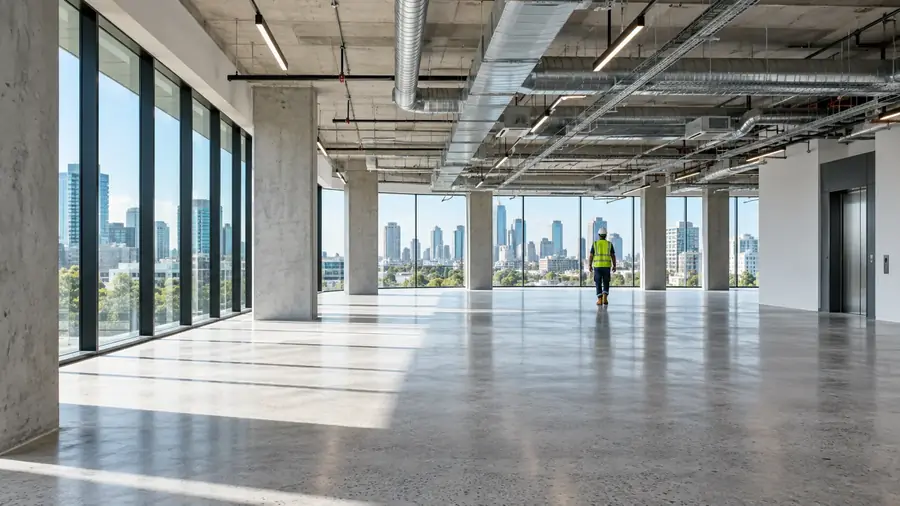
On commercial projects the same three stages apply, plus cleaning that runs during the build itself: site amenities, lunch sheds, site offices and common areas kept usable for the crews. Office fitouts, retail shells and new buildings all follow this pattern.
Larger sites usually need a crew for several nights rather than one big day, split by floor or zone so the building can be handed over in sections if the programme asks for it. During the build we can also keep site amenities and offices clean on a weekly schedule, which is usually cheaper than a heavy clean of those areas at the end.
Post-construction cleaning for fitouts and new buildings
For owners
What if you are the owner, not the builder?
Then you probably want an after builders clean. It is booked by the homeowner or business owner once the builder has left, and it goes after the fine dust that keeps drifting out of vents, cupboards and light fittings for weeks after a renovation.
Builders' contracts often include a "builders clean" that is really a rough tidy. If you have moved back in and are still wiping the same benches every morning, that is the dust an owner's clean is designed to deal with. It also suits landlords and businesses taking over a renovated space before tenants or staff move in, when nobody from the building team is coming back.
After builders cleaning for homes and businessesStill unsure which one you need? Our guide on builders clean vs after builders clean compares them side by side, including where a deep clean fits in.
Prices
How much does a builders clean cost?
It depends mainly on floor area, the stage, the finishes and how much the trades left behind. We price builders cleans per square metre, per stage or on an hourly basis, and once we have seen the plans or the site we confirm a fixed figure in writing for the agreed scope.
- Floor areaThe starting point for most quotes, taken from plans or measured on site.
- StageA rough clean takes less detail per square metre than a final.
- GlassFull-height glazing and partitions add real time.
- AccessLifts, stairs, parking and loading bays change the crew's day.
- ConditionHeavy splatter or paint on glass takes longer to lift safely.
- TimingNight, weekend and short-notice work is priced upfront.
When you compare builders cleaning quotes, check that each one covers the same stages, the same glass and the same floor finish, and that it says how many people will be on site and for how long. A low price that quietly drops the inside of the joinery or the external glass is rarely the cheaper option once the defects list comes back.
For worked examples and the questions to ask when comparing quotes, see builders cleaning prices in Melbourne.

Book it
How do you get a builders cleaning quote?
Send the site address, the stages you need, the approximate floor area and your programme dates. Plans and a finishes schedule help us price accurately. Most builders cleaning services quotes come back within a business day, with a site walk first for larger or unusual builds.
- Send the basicsAddress, stages, area, dates, and whether trades will still be on site.
- We scope it against the programmeEach stage is priced separately, with the date it is pencilled in for.
- Confirm and we lock in datesWe keep in touch with your site manager as the programme moves.
Useful extras if you have them: the finishes schedule, so we know which stone, timber and metal finishes are going in; the site rules and induction times; and the name of the person who will walk the final clean with us. With those in hand, the scope we send back will match the site closely and the price is unlikely to move.
Builders who work with us regularly tend to send the programme as soon as a job is awarded, so the cleans are booked before anyone is chasing them. Whenever you are ready, request a builders clean quote.
Questions
What do builders ask before booking a clean?
The four questions site managers ask us most often, with straight answers.
What is included in a builders clean?
How long does a builders clean take?
Do you clean the windows?
Can you work around trades still on site?
Have a handover date to hit?
Send the programme and the address. We will book the stages in and keep them moving with the build.