
Floor care
Floor Polishing and Floor Care in Melbourne
Floor polishing in Melbourne for commercial premises: the office corridors, shop floors, foyers, kitchens and showrooms where floors take a beating every day. We buff and burnish sealed floors, strip and reseal vinyl, restore tile and grout, maintain polished concrete and look after coated timber. This page explains which treatment suits which floor and how often. It is part of Cleaningia's work as a Melbourne cleaning company, and one of the services we are asked for most outside construction.

"Floor polishing" means different things to different people, and that causes a lot of wasted quotes. In the cleaning trade it means restoring the shine on a sealed hard floor with a machine: buffing, burnishing, or stripping old sealer off and laying new coats. To a homeowner with timber boards it often means sanding back to bare wood and coating again, which is a flooring trade with its own specialists. We do the first kind, across every common commercial floor, and we will tell you plainly when your floor needs the second.
By floor type
Which floor polishing in Melbourne suits your floor type?
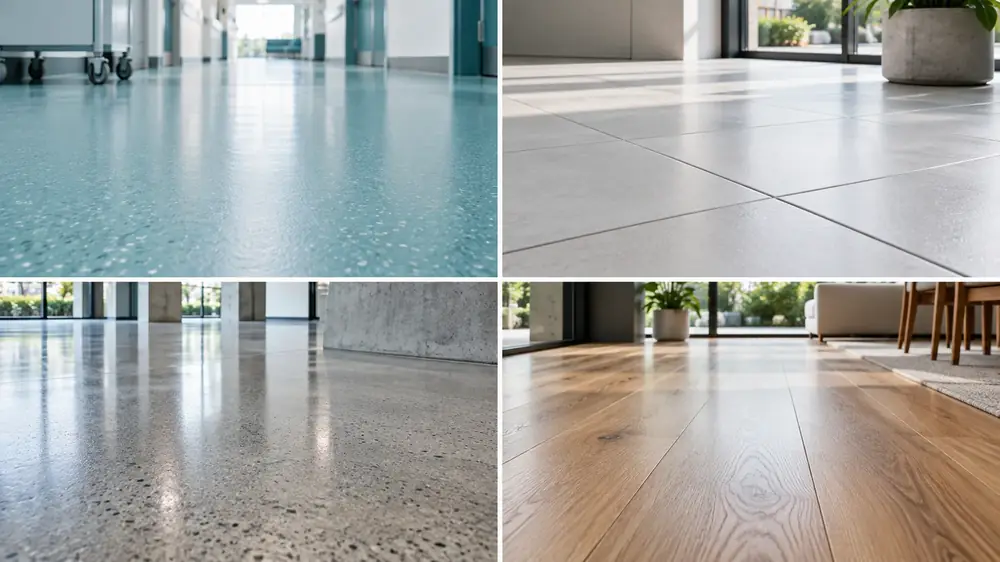
Sealed vinyl gets burnished and, now and then, stripped and resealed. Safety vinyl is scrubbed rather than sealed. Tiles are machine scrubbed with the grout restored, polished concrete is burnished with guard coat top-ups, and coated timber is cleaned, buffed and recoated. Pick your floor below to see what that involves.
Sealed vinyl
The most common commercial floor we look after, from corridors and staff rooms to shop back-of-house. It is protected by layers of acrylic sealer, and that sealer is what gets polished.
- Scrub and burnish to bring the shine back
- Spot-seal worn traffic lanes
- Full strip and seal when the sealer is worn through or yellowed
- Sealing over dirt, which traps it for good
- Heavy sealer build-up at edges and corners
- Harsh strippers on old, brittle sheet vinyl
Safety vinyl
The textured vinyl in kitchens, bathrooms and wet areas is made to grip. Most products are designed to be cleaned, not sealed, because a glossy coat fills the texture and can change how the floor performs underfoot.
- Deep scrub with a machine and a suitable brush
- Remove built-up grime from the texture
- Follow the manufacturer's care instructions
- Applying gloss sealer unless the maker allows it
- Leaving cleaning residue that makes it slippery
- Polishing it to look like sealed vinyl
Tile and grout
Porcelain and ceramic tiles are tough; the grout between them is not. It is porous, sits lower than the tile, and slowly fills with the dirty water every mop leaves behind.
- Machine scrub with extraction of the dirty water
- Detail the grout lines by hand and brush
- Seal or colour seal grout if you want it to stay clean
- Acid cleaners on natural stone or cement grout
- Pressure washers that erode grout
- Promising to fix cracked or missing grout by cleaning
Polished concrete
Ground and polished concrete is hard wearing, but its shine comes from the polish and, often, a protective guard or densifier. Traffic lanes dull over time, especially near entries where grit comes in.
- Scrub with a neutral cleaner
- Burnish with diamond-impregnated pads
- Top up guard coats where the finish allows
- Acidic or harsh alkaline cleaners
- Wax products that build up and scuff
- Regrinding when a burnish will do
Coated timber
Timber in halls, offices and homes is protected by a coating, usually polyurethane or oil. While the coating is intact, the floor can be cleaned, buffed and recoated without touching the timber itself.
- Deep clean with a timber-safe product
- Buff the coating to key it
- Arrange a maintenance recoat where suited
- Water left standing on timber
- Steam on any timber floor
- Sanding, which floor sanders do
Dull paths from the door to the busiest spot. A grey or yellow tint that mopping doesn't shift. Dark grout lines on otherwise clean tiles. Black scuffs that come back the day after they are removed. Water that no longer beads on a sealed floor. Any one of these means the protective layer is worn and routine cleaning can't fix it on its own.
Not sure what you have? Send a photo taken close to the floor and one of the whole room. Most floors can be identified from that, and where there is doubt we test a small area on the visit before committing to a method.
Buffing and burnishing
What is the difference between buffing and burnishing?
Both polish a sealed floor with a pad, but at very different speeds. Buffing uses a slow rotary machine, often with a spray cleaner, to lift light scuffs and restore an even sheen. Burnishing uses a high-speed machine that heats and hardens the sealer to a deep gloss.
Buffing is the routine tool. A slow rotary machine with a fine pad and a light spray lifts scuff marks and dull patches without much heat, and it suits floors that are in reasonable shape between bigger treatments. It is also the gentler option for older sealer that might not take the heat of a burnisher.
Burnishing is what gives a commercial vinyl corridor that wet-look shine. The pad spins many times faster, generating enough friction to harden the top layer of sealer and bring up the gloss. Done regularly, it keeps a floor looking freshly sealed for much longer and pushes back the day it needs a full strip.
Neither will fix a floor where the sealer has worn through. Once you can see bare vinyl in traffic lanes, polishing only shines the dirt, and the answer is a strip and seal.
Pads matter as much as machines. Coarse pads strip, medium pads scrub and fine pads polish, and using the wrong one on a burnisher can burn through a good finish in a single pass. Our crews match the pad to the floor and the job, which is one reason we ask to see the floor before settling on a method.
| Machine | Speed | Used for |
|---|---|---|
| Rotary floor machine | Slow | Scrubbing, spray buffing, stripping with the right pad |
| High-speed burnisher | Very fast | Hardening sealer to a high gloss |
| Auto scrubber | Brush with suction | Scrubbing and drying large areas in one pass |
| Wet vacuum | Suction | Lifting slurry and rinse water |

Strip and seal
When does a vinyl floor need stripping and resealing?
When polishing no longer brings it back: traffic lanes worn through to bare vinyl, a grey or yellow cast that doesn't lift, or patchy build-up at the edges. Stripping removes every layer of old sealer and trapped dirt, and fresh coats give the floor a clean, even base again.
It is a bigger job than a polish. The old finish is softened with a stripper, scrubbed off with a machine, and the slurry vacuumed up. The floor is rinsed and neutralised so the new sealer bonds, then several thin coats go down, each allowed to dry before the next. Most jobs run after hours or over a weekend, because the area has to stay closed until the final coat has cured enough to walk on.
Done well, a strip and seal resets the clock. Regular burnishing afterwards keeps that finish for far longer than leaving it until the next full strip. The full process, drying times and what to expect on the day are on our page for floor strip and seal in Melbourne.
On a new build or fitout, sealing new vinyl is often part of the final clean. We do it once the dust has gone, not before, so the first coats are not full of grit from the last trades. That fits neatly with our builders cleaning when a building is being handed over.
Timber floors
Can you polish timber floors?
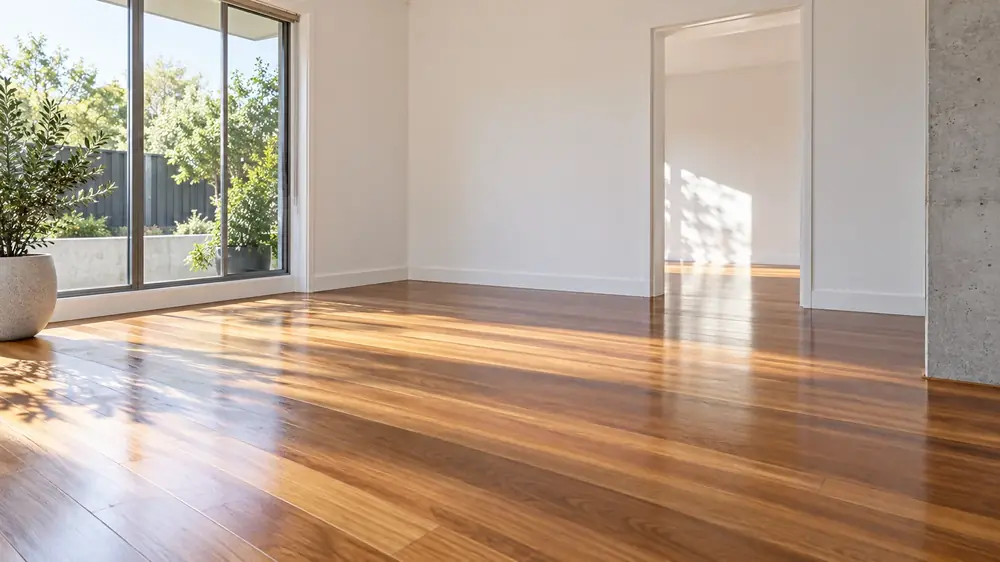
We clean, buff and maintain coated timber floors while the coating is still intact, which brings back the sheen and protects the wood. Taking boards back to raw timber and refinishing them belongs to floor sanders, and if your floor has reached that point, you will hear it from us before any money is spent.
The line between the two is the coating. Scuffs, dullness and light scratches that sit in the coating can usually be cleaned and buffed out, and a worn but intact coat can be refreshed with a maintenance recoat. Grey patches where the timber itself shows, deep gouges and boards that have lost their colour mean the coating has gone, and only sanding will fix it.
Laminate and hybrid floors look like timber but are not polished the same way at all. They cannot be sanded, and most should never be flooded or buffed with a hot machine. We clean them with the manufacturer's recommended method and nothing more.
For the details of maintenance recoats and how to tell what your floor needs, see timber floor polishing and maintenance.
Tile and grout
How do you restore dirty tile and grout?
By working the surface with a scrubbing machine and the joints with stiff hand brushes, extracting the dirty water instead of mopping it back into the joints, then rinsing and, if you choose, sealing the grout. Sealing, or a colour seal on badly stained grout, is what keeps it looking clean for longer.
Why grout goes dark
Grout is porous and sits below the tile surface. Each time a floor is mopped, some dirty water settles into the joints and dries there. After months of daily mopping, the grout is carrying the dirt the tiles shed.
How we clean it
A tile-safe cleaner is left to dwell, the floor is machine scrubbed, the grout lines are brushed by hand, and the dirty solution is picked up with a wet vacuum. The floor is rinsed so no residue is left to attract dirt again.
What cleaning won't fix
Cracked, crumbling or missing grout needs regrouting by a tiler. Stains that have soaked deep into old grout may only improve, not disappear, which is where a colour seal helps. We will say which before you book.
Commercial kitchens, bathrooms, foyers and food courts are where tile and grout cleaning makes the biggest visible difference. If you are looking for a commercial tile cleaning company, ask whether they extract the dirty water or simply mop it; that one detail decides whether the grout stays clean for a week or for months.
Polished concrete
How should commercial polished concrete floors be maintained?
With neutral cleaners, regular dust control and periodic burnishing with diamond-impregnated pads, plus guard coat top-ups where the finish uses one. That keeps the gloss even and stops grit wearing dull lanes. Grinding it back is rarely needed if the floor is looked after.
Commercial polished concrete floors are popular in offices, showrooms and new builds because they last, but they are not maintenance-free. Grit carried in on shoes acts like sandpaper, and the first sign is a dull path from the entry to the busiest desk or counter. Good entry matting and regular dust mopping do more to protect the shine than anything else. As a rule of thumb, matting long enough for several steps inside the door catches most of the grit before it reaches the floor you care about.
The chemistry matters. Acidic cleaners and some strong degreasers etch the surface and dull it, and wax-based products build up and scuff. We use a neutral cleaner for routine scrubbing, then burnish with pads impregnated with fine diamonds, which polish rather than coat.
It also helps to know what kind of concrete floor you have. A mechanically ground and polished slab behaves differently from a "grind and seal" floor, which has a topical coating that can wear through like a sealer. We check which it is before choosing a method, because the wrong one can do lasting harm.
A glossy floor is not automatically a slippery one, but finish, cleaning residue and water all change how a surface grips. WorkSafe Victoria's advice on slips, trips and falls calls for slip-resistant, well-maintained floor surfaces wherever water, grease or dust are present. That is why we rinse properly, never leave residue behind, and won't put a gloss coat on a floor designed to grip.
Maintenance programmes
What does a floor maintenance programme look like?
A programme matches the treatment to the traffic. Daily cleaning is done by whoever cleans the building; we add periodic machine work such as burnishing, deep scrubbing or a full strip and seal on a schedule set by how busy the floor is. The table shows a typical starting point.
| Floor | Daily | Every few weeks | Every few months | Every year or two |
|---|---|---|---|---|
| Sealed vinyl | Dust mop, damp mop | Spray buff or burnish | Scrub and spot seal | Strip and seal |
| Safety vinyl | Mop with the right cleaner | Machine scrub | Deep scrub | · |
| Tile and grout | Mop, change water often | Machine scrub | Deep clean grout | Reseal grout |
| Polished concrete | Dust mop, neutral clean | Scrub | Burnish | Guard coat top-up |
| Coated timber | Dust mop, barely damp | Timber-safe clean | Buff | Maintenance recoat |
A quiet office might need half of this, and a shopping centre walkway or supermarket entry more. We set the schedule after seeing the floor and how it is used, then adjust it once we have watched how quickly it wears. Programmes are usually cheaper per visit than one-off restorations, because the floor never falls far enough behind to need heavy work.
The daily part matters as much as ours. We will leave written care notes for your cleaners, including which products not to use; a single bottle of the wrong cleaner can undo a fresh seal within weeks.
Floor polishing in Melbourne on a programme also makes budgeting simpler. Instead of a large, unexpected restoration bill every few years, the cost is spread across planned visits, and the floor stays at a standard you can show clients and inspectors all year.
Get a price
How do you get a floor polishing quote?
Send photos of the floor, the approximate area in square metres, the type of floor if you know it and when the area can be closed. From that we can usually suggest the right treatment and a price range, and we confirm a fixed figure after a short look at the floor itself.
Photos
One close to the floor in good light, one of the whole room, and one of the worst traffic lane. They tell us the floor type and how worn the finish is.
Area and access
A rough floor area, whether furniture needs moving, and when the space can be closed so coats can dry undisturbed.
History
When it was last sealed or polished, if you know, and what products your cleaners use day to day.
To budget before you ask, see what floor polishing and strip and seal cost, including what makes one floor cheaper than another. When you are ready, ask for a floor polishing quote and attach your photos.
Questions
What do people ask about floor polishing?
Frequency, timber and grout come up more than anything else.
How often should floors be polished?
Do you sand timber floors?
Can you restore grout?
Floor looking tired, grey or patchy?
Send a few photos and the rough area. We will tell you which treatment it needs, and what it will cost.