
Timber floors
Timber Floor Polishing in Melbourne
Timber and hardwood floor polishing in Melbourne, the maintenance kind: deep cleaning, buffing and recoating floorboards while the existing coating is still intact. It suits offices, halls, shops and homes going to market where the boards look tired but are not worn through. If your floor needs sanding back to bare timber, that is a flooring trade we don't do, and this page will help you tell which you need. It sits under our wider floor polishing and floor care service.
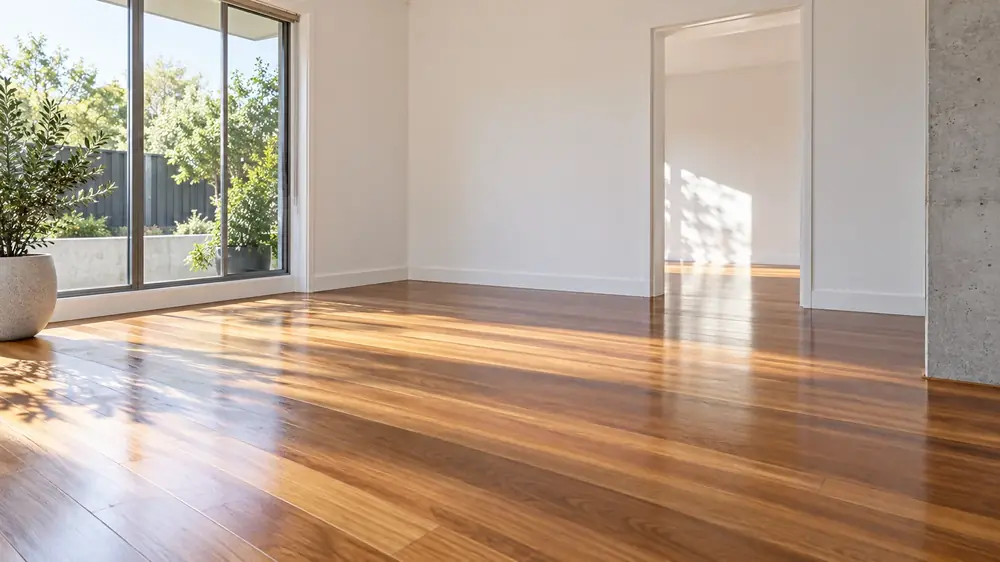
Polishing timber floors
What does hardwood floor polishing involve when the floor isn't sanded?
Hardwood floor polishing without sanding works on the coating, not the timber. The floor is deep cleaned with a timber-safe product, lightly abraded with a fine pad so a new coat can grip, then given a fresh maintenance coat of a finish compatible with the one already there.
Most polished floor boards in Melbourne homes and commercial buildings are protected by a clear coating, usually a water-based or solvent-based polyurethane, and sometimes a penetrating oil or hardwax oil. Day-to-day wear happens in that coating: scuffs, dulling, fine scratches and a grey film in traffic paths. As long as the coating hasn't worn through, it can be refreshed without touching the wood underneath.
The light abrasion step is often called a screen and recoat. A fine screen or pad on a slow machine scuffs the surface just enough to key it, the dust is removed completely, and a new coat goes on. It evens out the sheen, fills fine scratches and adds a fresh wear layer, for a fraction of the cost and disruption of a full sand.
Compatibility is the part that goes wrong when it is rushed. A water-based coat over an incompatible finish, or any coat over a floor cleaned with silicone or wax-based products for years, can fail to bond and peel. We identify the existing finish and test a small area before recoating a whole room.
| Finish | Looks | Maintenance |
|---|---|---|
| Water-based polyurethane | Clear, natural tone | Recoat when dull; low odour |
| Solvent-based polyurethane | Warmer, ambers over time | Recoat when dull; stronger fumes, longer drying |
| Oil or hardwax oil | Matt, soaks into the timber | Refreshed with more oil, not a surface coat |
Steam mops push hot moisture into joints between boards and can cloud coatings. We never use steam on timber, and we keep water to a minimum on every timber floor we touch.
Recoat or full sand?
Does your floor need a recoat or a full sand and polish?
A recoat is enough when the coating is dull, scuffed or finely scratched but still covers the timber everywhere. You need to sand and polish hardwood floors when the coating has worn through to grey or bare wood, when scratches reach the timber, or when boards are stained, cupped or badly damaged.
Is the coating worn through anywhere?
NoDull or scuffed but coated all over: a clean, buff and recoat will usually bring it back.
YesGrey or raw timber showing in traffic paths: the floor needs sanding to get an even finish.
How deep are the scratches?
SurfaceFine scratches in the coating fill and fade with a recoat.
DeepGouges into the wood, dents from furniture or pet claw marks through the finish need sanding.
What colour are the boards?
EvenColour is consistent apart from dirt: a deep clean may be all it needs.
PatchyWater stains, sun fade under rugs or black marks may need sanding, or may only improve. We check first.
Put a few drops of water on the worst traffic area and on a protected corner under furniture. If the water beads up in both places, the coating is still there and a recoat is likely to work. If it soaks in and darkens the timber in the traffic area, the coating has gone there and sanding is the honest answer.
Timing makes a big difference to cost. A floor recoated while the coating is still intact can go on for years before it ever needs sanding. Leave it until the traffic paths are down to bare wood and the only fix is a full sand, which removes a layer of timber each time. Solid boards can be sanded a limited number of times over their life, and engineered boards with a thin top layer even fewer, so a recoat at the right moment protects the floor itself.
If your floor does need sanding, we will say so and suggest you contact a floor sander directly. There is no point paying for a recoat that can't fix the problem, and a good sander will tell you the same thing in reverse. When you get a sanding quote, ask how much timber is left above the tongue on your boards; that tells you how many more sands the floor can take.
Laminate
Can laminate floors be polished like timber?
No. Laminate has a printed image under a hard factory wear layer, so it can't be sanded or recoated like timber, and most laminate floor polish products leave a smeary film. It should be cleaned with a barely damp mop and the manufacturer's recommended cleaner, with no wax, steam or buffing machines.
| Floor | What it is | Can it be sanded? | How we look after it |
|---|---|---|---|
| Solid timber boards | Solid hardwood through the full thickness | Yes, several times | Clean, buff and recoat; refer for sanding |
| Engineered timber | Real timber top layer on a plywood base | Limited, depends on top layer thickness | Clean, buff and recoat with care |
| Laminate | Photo layer under a hard wear surface | No | Damp mop with the recommended cleaner |
| Hybrid or vinyl plank | Rigid core with a vinyl wear layer | No | Clean as per the manufacturer; no sealer unless allowed |
Laminate's weak point is water. It is usually fine on top, but water that gets into the joints makes the core swell and the edges lift, and that damage is permanent. That is why we never flood a laminate floor and why a dull-looking laminate is usually a residue problem rather than a wear problem. Removing the build-up of old cleaning products often brings it back more than anything else could.
Looking after timber between recoats
Most wear on a timber floor comes from grit and furniture. Felt pads under chair and table legs, a good mat at each entry and a regular dust mop do more to protect the coating than any product. For wet cleaning, a barely damp mop with a pH-neutral timber cleaner is enough; anything that promises to "polish" or "revive" usually leaves a film that makes the next recoat harder.
Melbourne's seasons show up in timber too. Boards shrink and gaps open in winter when the heating runs, then close again in the humid months. That movement is normal. Cupping, where board edges rise above the middle, is different and usually points to moisture from below, which is worth checking before any recoat. Strong sun through north-facing windows also fades and changes the colour of timber over time, so rugs moved after years often leave a lighter patch that a recoat can't hide.
Commercial timber has the same rules with more traffic. Community and church halls, offices with timber boards and boutique shops with timber floors tend to wear a clear path from the door; recoating those areas on a schedule keeps the rest of the floor from ever needing a sand.
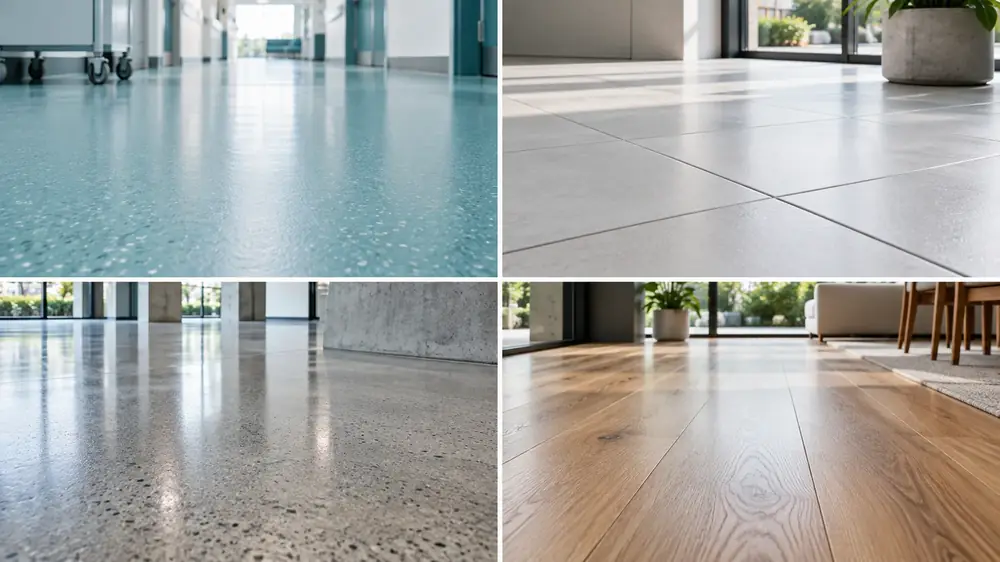
If you are not sure whether a floor is laminate or real timber, look at the edge of a board near a doorway or a skirting board. Timber shows grain running through the thickness; laminate shows a thin printed layer on a fibreboard core. A photo of that edge is enough for us to tell.
Book a look
How do you get a timber floor polishing quote?
Send photos of the worst traffic area, the whole room and a close-up of any scratches, plus the rough floor area and what cleaning products are used now. From those we can usually say whether a recoat will work; if it won't, we will tell you before any visit is booked.
- Photos firstTraffic paths, a wide shot and close-ups. The water drop test result helps too.
- Test patchOn site, we identify the finish and test adhesion in a hidden spot before committing.
- Recoat dayFurniture out, clean, abrade, coat. You get clear advice on when to walk on it.
Drying depends on the finish. A water-based maintenance coat is usually walkable in socks within hours and ready for furniture within a day or two, while solvent-based finishes take longer and smell stronger, so the room should stay ventilated and empty. Solvent-based coatings give off vapour while they cure, and we handle them in line with WorkSafe Victoria's guidance on hazardous substances: good airflow, the right PPE and the product's safety data sheet on hand. Full hardness takes around a week either way, so rugs and heavy furniture wait until then.
For typical costs across floor types, see what floor polishing and recoating cost. To start, send us your timber floor photos and we will tell you honestly what the floor needs.
Questions
What do people ask about timber floors?
Sanding, drying time and laminate: the three questions that decide whether we are the right people for your floor, or whether you need someone else.
Do you sand timber floors?
How long does recoating take?
Can you polish laminate?
Boards looking tired but not worn through?
Send three photos and the room size. We will tell you whether a recoat will work before anyone books anything.