
Graffiti removal
Graffiti Removal in Melbourne
Graffiti removal in Melbourne for shop owners, building and property managers, owners corporations and businesses with walls, roller doors, signs and glass that keep getting tagged. We identify the surface and the paint, remove it with a method that surface can take, and help you keep it off next time. The page covers methods by surface, etched glass, protective coatings, costs and how to book. Cleaningia is a Melbourne cleaning company that takes on specialist jobs like this alongside construction and floor work.
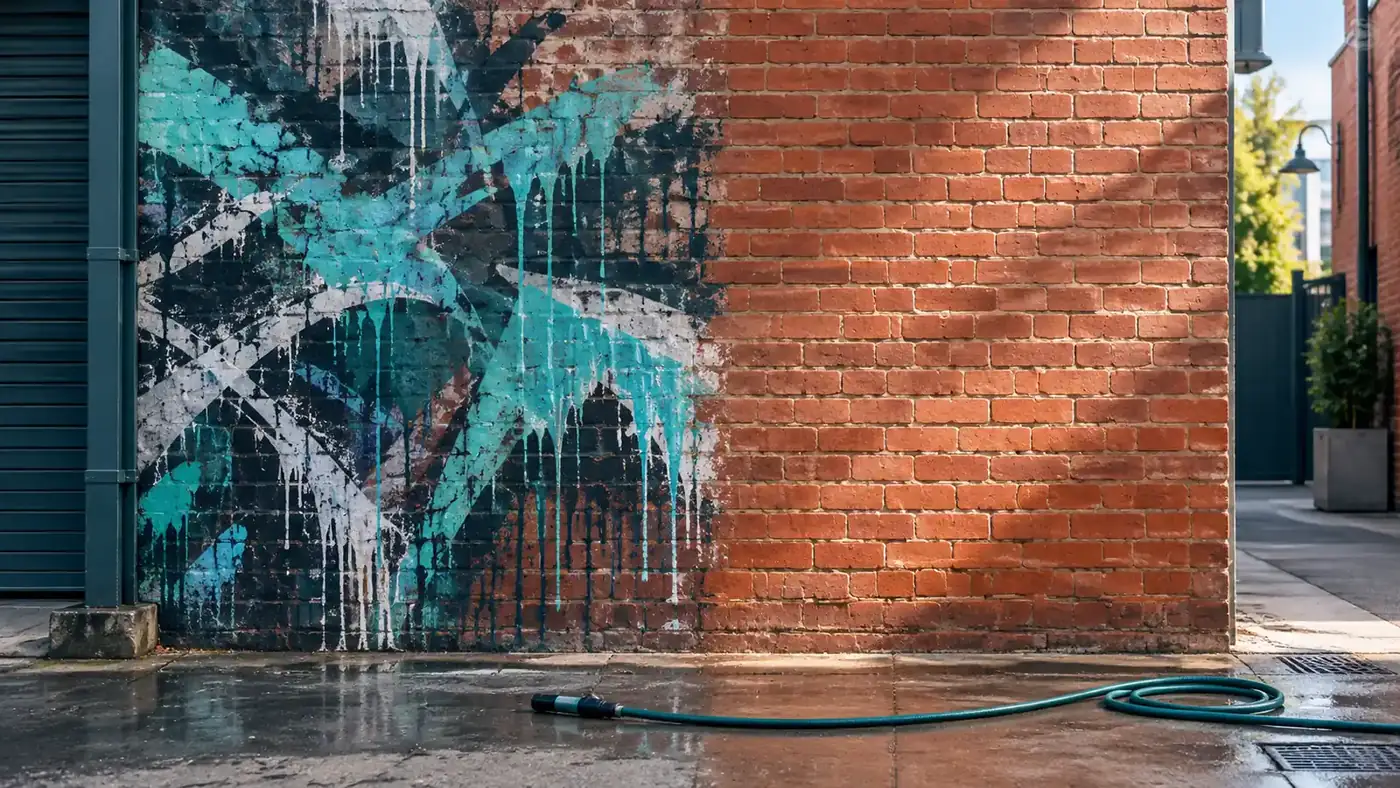
Without damage
How does graffiti removal in Melbourne avoid damaging the surface?
By starting with the gentlest method that will work and only stepping up when it doesn't. Graffiti removal in Melbourne goes wrong when a crew reaches straight for high pressure or strong solvent; the tag goes, but it takes the face of the brick, the render or the paint with it and leaves a "ghost" outline.
Should you try to remove graffiti yourself? On smooth, sealed surfaces like glass, powder-coated metal or a gloss-painted door, a hardware-store remover and a soft cloth often work on a fresh tag. On brick, render, old paint or anything porous, DIY attempts with a household pressure washer or strong solvent are the most common cause of the ghosting and surface damage we are called to fix. If the surface soaks up water, it is worth getting it done properly the first time.
We test first, on a small, out-of-the-way part of the tag. That tells us how the paint responds, whether the surface is sealed, and how much dwell time the remover needs. Only then do we treat the whole area, working from the edges in so the paint doesn't spread into clean surface around it.
Pressure and heat are tools, not the method. Hot water at moderate pressure helps rinse softened paint out of porous surfaces, but blasting raw paint off soft brick, render or old mortar erodes the surface and can drive pigment deeper. We keep the pressure as low as the job allows and adjust it by surface.
The water has to go somewhere, too. Rinse water carries paint, solvent and grime, and Victoria's general environmental duty covers any activity that could pollute stormwater, which EPA Victoria explains on its stormwater page. We use biodegradable removers where they work, block and capture run-off at the drain, and take the waste away rather than hosing it into the gutter. That is what an eco friendly graffiti removal service should mean in practice.
Graffiti removers are strong chemicals even when they are biodegradable. Everyone on the crew is in gloves and safety glasses, barriers keep passers-by clear of the work zone, and follow each product's safety data sheet. On busy footpaths we work early or late so shoppers and pedestrians are not walking through the rinse zone.

Shops and businesses
Shopfronts, roller doors and signage are tagged most often, and every day the tag stays up it tells customers the street is neglected. Businesses usually want it gone before opening, so we work early mornings or after close where we can.
Owners corporations
Apartment buildings deal with tags on fences, bin enclosures, car park entries and letterboxes. Strata managers need a quote they can approve quickly, before and after photos for the committee, and an invoice that matches the work order.
Property and facility managers
Industrial units, offices and managed retail sites often have long walls facing laneways and train lines. A regular removal round, sometimes with coatings on the worst walls, keeps them clean without a new work order every week.
| Type | What it is | How hard to remove |
|---|---|---|
| Spray paint | Aerosol enamel or acrylic, the most common by far | Easy when fresh on sealed surfaces, harder on porous brick as it ages |
| Paint and ink markers | Wide-tip paint pens and permanent ink markers | Ink can stain deep into porous surfaces; paint pens behave like spray paint |
| Stickers and posters | Printed stickers, paste-ups and glued posters | Mostly adhesive work; heat and a residue remover do most of it |
| Scratched tags | Marks scratched into glass, metal or plastic | Damage, not dirt; polishing or replacement rather than cleaning |
| Acid etching | Etching cream or acid applied to glass | Polished out if shallow; deep etching may need a new pane |
Stickers and paste-ups are worth a special mention because they are often left too long. Paper posters glued to brick or render soak up the glue and bond to the surface as they dry in the sun. Softening them with warm water or steam, scraping gently and treating what is left with a residue remover gets most of it off without damage. On glass and metal, a blade and adhesive remover do the job quickly.
By surface
Which method is used to remove graffiti from each surface?
Brick and stone get a remover and a hot, low-pressure rinse; render and painted walls need gentler removers or a colour-matched paint-out; metal doors and signs are cleaned by hand with solvent; glass is scraped for paint and polished or filmed for etching. The gauges show how much pressure and chemical strength each surface tolerates.
Face brick and stone
A graffiti remover is left to dwell and soften the paint in the pores, then rinsed out with hot water at moderate pressure. Older, softer bricks and lime mortar get lower pressure and more patience.
PressureChemical
Render
Render is softer than brick and often painted or sealed. We test whether the paint on top is original; if removal would lift the coating, a matched paint-out gives a cleaner result than chasing the tag.
PressureChemical
Painted walls and fences
Solvents strong enough to lift spray paint usually lift the wall paint too. A careful paint-out, matched to the existing colour and sheen and extended to a natural break, is usually the better finish.
PressureChemical
Metal, roller doors and signs
Powder coat and factory finishes are removed by hand with a solvent chosen not to soften the coating underneath, then wiped clean. Signage films and vinyl lettering need even more care.
PressureChemical
Glass
Paint and marker come off with a blade and cleaner. Etching, from acid or scratching, is damage to the glass itself; light etching can be polished out, deeper marks may need film or a new pane.
PressureChemical
Timber and natural surfaces
Raw timber soaks paint in quickly. Gentle removers and hand work lift what they can; stained timber may need light sanding or re-oiling by the owner's preferred trade once the paint is out.
PressureChemical
Heritage buildings get extra care. Victorian-era brick and bluestone around inner Melbourne can be much softer than modern materials, and some are protected, so we use the lowest-impact methods, test more, and check whether the owner has conditions from a heritage adviser before starting. If you know a building is heritage-listed, tell us when you send the photo.
What about the shadow left behind?
Sometimes the paint comes off but a faint outline remains, usually on porous brick or where an earlier, harsher removal opened up the surface. It is pigment sitting deep in the pores, or a change in the surface texture where the old tag was. A second treatment with a poultice or a slower-acting remover often draws most of it out. Where it won't shift, we will tell you honestly and suggest the least visible option, which might be a light clean of the whole wall panel so the patch blends in.
Height changes the job. Most tags are within reach from the ground or a short ladder. Graffiti on upper levels, rooftops or over busy footpaths may need a boom or scissor lift and traffic or pedestrian management, which we quote separately and only take on where we can do it safely.

Etched glass
Can etched graffiti be removed from glass?
Often, yes, if it is shallow. Acid etching and scratched tags damage the glass surface itself, so they have to be polished out rather than cleaned off. Light etching usually polishes away well; deep etching may leave a lens effect, and a new pane or a protective film is sometimes the better answer.
It helps to know which kind of damage you have. Run a fingernail across the mark: if it catches, the tag is scratched in, which is usually harder to polish out than a smooth, frosted etch left by acid cream. Photos in raking light, taken from the side, show us the depth better than a straight-on shot.
Shopfronts, bus-stop style glass panels, lift doors and mirrors are the usual targets, because etching creams and scribing tools leave a mark that normal cleaning can't touch. Polishing uses abrasive compounds and specialised pads to level the surface around the mark, a little at a time, with the glass kept cool.
The honest limit is depth. Each pass removes a tiny amount of glass, and going too deep in one spot can create distortion you can see when you look through it. We look at the etching in good light first and tell you whether polishing, a protective film over it, or replacing the pane makes more sense on cost and appearance.
Full detail on the process and when replacement wins is on our acid-etched glass graffiti removal page.
Glass that gets hit repeatedly is a good candidate for a clear sacrificial film. Etching and scratching damage the film instead of the glass, and replacing a sheet of film is far cheaper than polishing or replacing a pane each time.
Anti-graffiti coatings
Do anti-graffiti coatings actually work?
They don't stop someone tagging a wall, but they make removal much faster, cheaper and kinder to the surface. A sacrificial coating washes off with the graffiti and has to be reapplied; a permanent coating stays put and lets paint be wiped or rinsed away time after time.
| Type | How it works | Best for | Trade-off |
|---|---|---|---|
| Sacrificial | A barrier layer that comes off with the paint when rinsed with hot water | Heritage and porous masonry that needs to breathe | Must be reapplied after each removal |
| Semi-permanent | Survives several cleanings before it needs a top-up | Walls hit occasionally | Periodic reapplication |
| Permanent | A hard, non-stick film that paint can't bond to | Roller doors, signage, often-tagged walls | Can change the look; harder to remove later |
Victoria Police's advice on preventing and removing graffiti recommends easy-clean coatings on large surfaces, reducing access to walls and removing tags as quickly as possible, because fast removal gives taggers less reason to come back. A coating on the wall that gets hit every month usually pays for itself within a few removals.
Application matters as much as the product. The surface must be completely clean and dry before a coating goes on, or it seals the ghost of the old tag underneath. We apply coatings after removal, on a dry day, and note on the invoice which product was used and when, so the next removal uses the right method for that coating. Coatings also have a life; sun and weather wear them down over the years, and a quick check during a removal visit tells us when a wall is due for a fresh coat.
Coatings are not right for every surface. Some change the colour or sheen of brick, some trap moisture in masonry that needs to breathe, and a permanent coating is hard to undo if you change your mind. We will talk you through the options for your wall and test a small area so you can see the finish before committing.
Costs
What does graffiti removal cost?
It depends on the area, the surface, the type of paint, how long it has been there, height and access. Small fresh tags on smooth surfaces are quick and inexpensive; large, old pieces on porous brick, heritage surfaces or etched glass take far longer. Most jobs are priced from photos.
Age matters more than people expect. A tag that is a few days old has only just started to soak into brick or render; after months of sun and rain, pigment is much deeper and takes more product and more passes to lift. Removing graffiti quickly is usually the cheapest option as well as the best-looking one.
Access is the other big variable. A wall we can reach from a quiet footpath with a van parked out front is quick; the same wall above a busy entrance, behind locked gates or only reachable from a neighbour's property adds time for barriers, permissions and moving equipment. Letting us know about access upfront keeps the quote accurate.
Regular clients often choose an ongoing arrangement instead of one-off callouts. A shopfront or laneway wall that gets hit often can be checked and cleaned on a set schedule, sometimes with a coating in place, which keeps the per-visit cost predictable.
- Area in square metres, and whether it is one tag or many
- Surface: smooth and sealed, or porous and old
- Paint type and how long it has been there
- Height, access and whether a lift is needed
- Paint-out or coating added after removal
For typical price ranges and what moves them, read our guide on how much graffiti removal costs in Australia.

Book it
How do you book a graffiti removal service?
Send us a photo of the whole tagged area, a close-up of the surface, the address and roughly how high it goes. We identify the surface and paint from the photos, send a price, and book the removal. Where the wall is also reachable by your council, it is worth checking with them first.
- PhotoWhole area, a close-up and something for scale, like a door or a person.
- IdentifyWe work out the surface, the paint and the right method, and flag heritage or height issues.
- RemoveTest patch first, then the full area, with run-off captured and the site left clean.
- ProtectOptional coating, before and after photos, and a plan if the wall is a regular target.
Councils help with some graffiti. The City of Melbourne, for example, removes graffiti from private property when it can be reached from the street or a public place and the owner consents; anything that needs access to the property itself is up to the owner, and that is where a commercial graffiti removal company comes in. Other councils have their own rules, so a quick check can save you money on street-facing walls. For walls inside a property, in car parks, on upper floors or where the council's timeframe is too slow for a business that needs to trade, a private removal is usually the answer, and some owners corporations use both.
For the photos, stand back far enough to show the whole tag and something for scale, then take a close-up of the surface in daylight. Tell us the height of the highest part, whether there is a footpath or car park below, and when the site is quiet. That is usually enough for a fixed price without a visit.
If the graffiti is new, take a photo before it is removed and report it; police use those reports to link tags to offenders. Then send us the photos for a graffiti removal quote.
Questions
What do people ask about graffiti removal?
Damage, speed and prevention: what property owners want to know before they book.
Will graffiti removal damage my brick?
How fast can you come out?
Can graffiti be prevented?
Got a tag that needs to go?
Send a photo of the wall, the surface and the address. The sooner it comes off, the easier and cheaper it is.