
Upholstery
Upholstery Cleaning in Melbourne
Upholstery cleaning in Melbourne for offices, venues, reception areas and homes: office chairs, lounges, booths, dining chairs and sofas cleaned with a method chosen for the fabric, not a one-size steam clean. We read the cleaning code, test first and work after hours for commercial clients so seating is dry by morning. This page explains fabrics, methods, drying and prices. It sits among the specialist jobs handled by Cleaningia as a Melbourne cleaning company, alongside floors, graffiti and construction work.

Upholstery gets dirty in a way that is easy to ignore until it isn't. Body oils darken the arms and headrests, spills leave rings, and dust works deep into the weave. In an office, the reception lounge is the first thing a visitor sits on; in a cafe or bar, booths are judged every day; at home, the sofa takes the most wear of any piece of furniture. A professional upholstery cleaning lifts what vacuuming can't, without damaging the fabric, and that last part is where most of the skill lies.
By fabric
How does upholstery cleaning in Melbourne change with the fabric?
Upholstery cleaning in Melbourne starts with the fabric's cleaning code. W means water-based cleaning is safe, S means solvent only, W/S allows either, and X means vacuum only. The code, the fibre and the colour fastness decide whether we use hot water extraction, a low-moisture method or a dry solvent clean.
- Water-based
Most synthetics such as polyester, nylon and many microfibres. Suited to hot water extraction with a fabric-safe rinse.
- Solvent only
Fabrics that shrink, bleed or water-mark, including many viscose, rayon and some cottons. Cleaned with a dry solvent method.
- Either
Tolerates both. We choose based on the soiling: water for general grime, solvent for oily marks.
- Vacuum only
No liquid at all. Vacuumed and brushed, and we tell you honestly that deep cleaning isn't possible.
You will normally find the code stitched under a seat cushion, on the chair base, or in the furniture supplier's product sheet. Without it, a patch somewhere out of sight is cleaned first with the planned method and checked for colour run, shrinkage and texture change before going any further.
Natural fibres need extra care. Cotton, linen and viscose can brown if they are over-wet, as moisture draws natural colour from deep in the fibre to the surface as it dries. Wool is durable but shrinks with heat and harsh products. Velvet and chenille have a pile that must be brushed in the right direction as it dries or it looks patchy. None of these are reasons to avoid cleaning; they are reasons to choose the method carefully.
Stains are treated before the main clean. Coffee, food, ink, makeup and grease each respond to different spotters, and knowing what caused a mark helps. Some stains, especially old ones or those set by heat, only lighten. We tell you what to expect before we start rather than after.
| Stain | Usual result |
|---|---|
| Coffee and tea | Usually lifts, especially if recent |
| Food and drink spills | Usually lifts; sugary spills need extra rinsing |
| Body oils on arms and headrests | Lifts well with a pre-treatment |
| Ink and pen | Often lightens; some inks set permanently |
| Red wine | Improves a lot if not heat-set |
| Water marks and rings | Usually even out with a full panel clean |

Office and venue seating
How is office and venue seating cleaned?
After hours, in batches, so seating is dry and back in use by the next working day. We clean office chairs, meeting room chairs, reception lounges, breakout sofas, restaurant booths and banquettes, working through them in the order that causes least disruption and leaving fans running where airflow is poor.
| Seating | Usual problem | How we handle it |
|---|---|---|
| Office task chairs | Dark seats and armrests from daily use | Spot treatment then extraction, arms and backs wiped |
| Meeting and boardroom chairs | Coffee and food spills | Stain treatment first, then a full clean |
| Reception lounges | Body oils on headrests and arms, dust in seams | Pre-treat high-contact areas, extract, groom the fabric |
| Cafe and restaurant booths | Grease, crumbs in seams, sticky spills | Degrease, detail seams, clean vinyl or leather separately |
| Waiting room seating | Heavy general soiling | Regular scheduled cleans rather than one-off rescues |
Office upholstery cleaning works best as a routine rather than a rescue. Chairs cleaned once or twice a year never reach the point where marks are set in; chairs left for five years often only partly recover. Many offices add a seating clean to their regular programme, timed for a quiet week or the summer break.
Shared seating is worth a thought. Meeting room chairs, hot desks and reception lounges are used by many people every day, and fabric holds what they bring in. A regular clean keeps shared seating fresh without anyone having to raise it, which is often the point: nobody complains about chairs until they are embarrassing.
Mesh-back task chairs are common in modern offices. The mesh itself is usually wiped and brushed rather than extracted, while the fabric seat gets the full clean, so a chair that looks like one piece is really two jobs done together.
Volume makes a difference to price and time. Fifty identical task chairs are quick to work through once the method is set, which keeps the per-chair cost down. Mixed furniture with several fabrics takes longer, because each type is tested and cleaned on its own terms.
Vinyl and faux leather are common in hospitality and waiting areas. They don't hold dirt in the same way as fabric, but they crack if cleaned with harsh products, so we use a mild cleaner and a conditioner made for synthetic surfaces rather than a leather product.
Dust matters in seating too. Better Health Channel notes that heavily used upholstered furniture holds more house dust mites than the rest of a room and recommends regular vacuuming of seams. Our clean includes a thorough vacuum of seams and crevices before any wet work.
Steam cleaning
Is steam cleaning right for your upholstery?
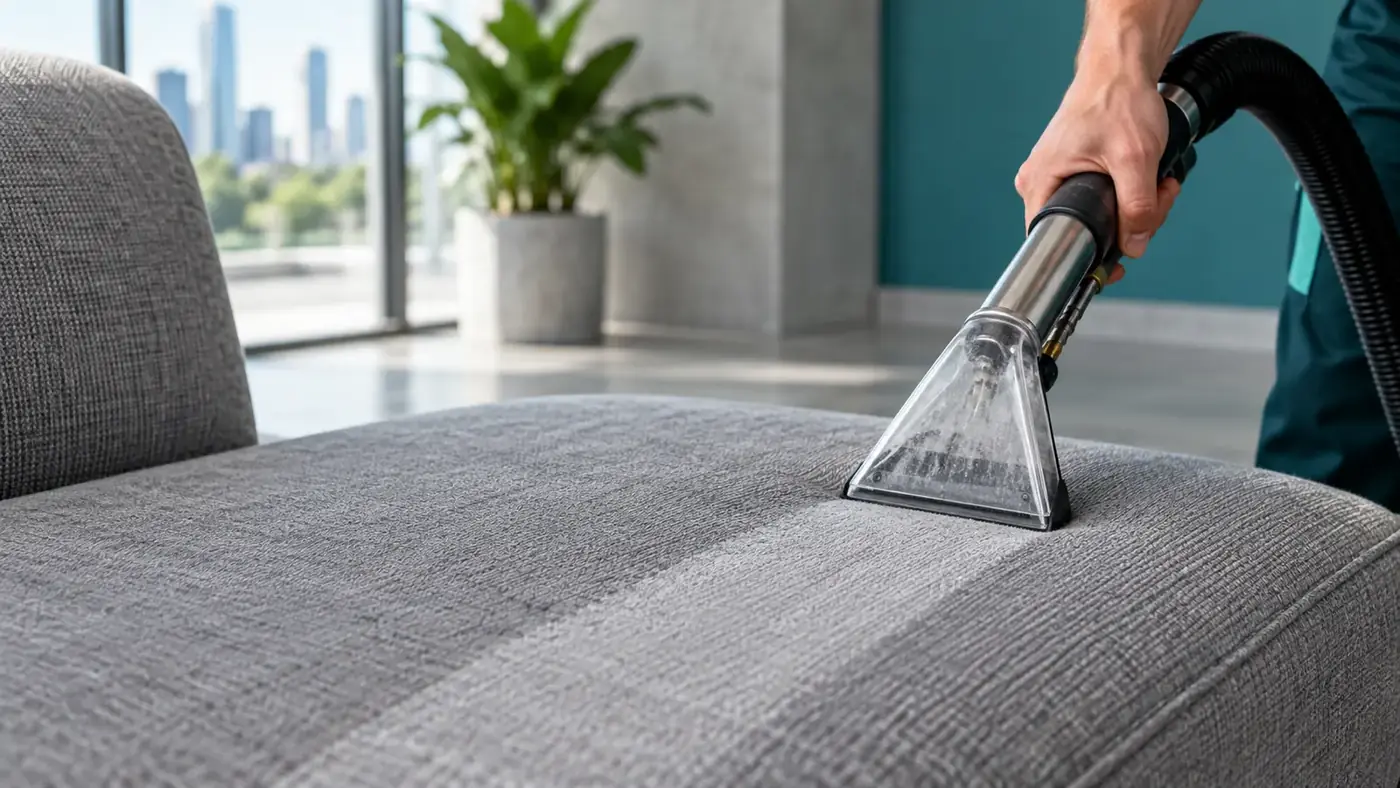
For most W-coded fabrics, yes. What people call steam cleaning is really hot water extraction: a cleaning solution is worked into the fabric, then rinsed and pulled back out with strong suction, taking dirt and residue with it. It suits most synthetic upholstery but not solvent-only fabrics or leather.
The extraction part is what makes it work. Warm water loosens soil, but it is the vacuum pulling the water back out that removes it; a machine with weak suction leaves fabric wet and dirty water in the padding. Good extraction also keeps drying time short, which matters for office chairs needed the next morning.
The rinse matters as much as the clean. Detergent left in fabric attracts new dirt quickly, which is why some cheaply cleaned sofas look worse a month later than before. We rinse with a neutralising solution so the fabric stays cleaner for longer.
Not every job needs full extraction. For lightly soiled commercial seating, or fabrics that shouldn't get very wet, a low-moisture method works well: a cleaning solution is brushed into the fabric, where it binds with dirt and dries to a residue that is then vacuumed away. Drying is faster, and it suits quick turnarounds between events or busy office weeks.
For the full process, the fabrics it suits and how it compares with dry cleaning methods, see our page on upholstery steam cleaning in Melbourne.
Fabric and leather
How is leather upholstery cleaned differently from fabric?
Leather is cleaned with a gentle leather cleaner and soft brushes, then conditioned to keep it supple; it is never steamed or soaked. Fabric is cleaned by extraction or a solvent method depending on its code. Both start with identifying exactly what the material is, because the wrong product can mark either for good.
Not all leather is the same. Protected or pigmented leather, the most common type on office and commercial furniture, has a coated surface and is the easiest to clean. Aniline and semi-aniline leathers are softer and more natural looking but absorb liquids, so they need very careful, low-moisture cleaning. We check which you have by testing how the surface absorbs a drop of water.
Conditioning is not optional with leather. Cleaning removes some of the natural oils, and in Melbourne's dry, heated winters leather left unconditioned can crack at the seat and arms. A conditioner put back after cleaning keeps it soft and helps it resist future stains.
Mixed pieces are common: a leather sofa with fabric cushions, or a booth with vinyl seats and fabric backs. Each surface is cleaned with its own method in the same visit. The detail on both, including delicate and specialty fabrics, is on our page about fabric and leather upholstery cleaning.
What we won't do
- Steam or soak leather
- Wet-clean an S or X coded fabric
- Skip the test on unknown fabric
- Promise stains will vanish before seeing them
- Leave detergent residue in the fabric
At home
Do you clean upholstery in homes as well?
Yes. Alongside commercial seating, we clean sofas, armchairs, dining chairs, ottomans, upholstered bed heads and window seats in homes across Melbourne. The method is the same fabric-first approach, with extra care for the things homes bring: kids, pets, rugs underneath and furniture that can't easily be moved.
Sofas take the most wear. The seat cushions and arms darken first, and the back cushions collect dust and hair. Where covers are removable, we clean them on the frame rather than putting them through a washing machine, which can shrink them so they never fit again.
Homes with pets and children often want a clean every six to twelve months. Pet hair is removed first with a rubber brush and vacuum, then the fabric is cleaned; accidents are treated with an enzyme product that breaks down the organic matter rather than just masking smells.
We protect your floors while we work, with mats under the machine and furniture blocks under freshly cleaned pieces so damp fabric doesn't sit on timber or rugs. A home clean also pairs well with a sale or a lease handback; see our pre-sale and vacate cleaning if the house is about to be photographed or inspected.
Keeping upholstery clean between visits
- Vacuum weekly, including seams and under cushions
- Blot spills straight away; never rub
- Turn and rotate loose cushions
- Keep strong sun off fabric and leather
- Test any spot cleaner on a hidden area first
Prices
How much does upholstery cleaning cost?
Upholstery is usually priced per seat or per item. In Melbourne in 2026, fabric lounges are commonly quoted at around $30 to $45 a seat and leather at around $50 to $60, with office chairs from about $15 to $30 each. Most companies also have a minimum job charge.
| Item | Typical range | What moves it |
|---|---|---|
| Fabric lounge | About $30 to $45 per seat | Fabric type, soiling, loose or fixed cushions |
| Leather lounge | About $50 to $60 per seat | Leather type and conditioning needed |
| Office chair | About $15 to $30 each | Quantity, fabric, arms and backs included |
| Dining chair | Priced per chair | Seat only or seat and back |
| Booths and banquettes | Priced per metre or per booth | Length, grease, mixed materials |
These figures reflect what Melbourne upholstery cleaners were publishing in 2026 and are rounded for readability. They show the usual market range, not our rate card; your price is confirmed in writing before we start.
Larger commercial jobs usually cost less per item, because a crew can work through identical chairs quickly. Heavily soiled pieces, delicate natural fabrics and stain removal on set marks cost more. Fabric protector, applied after cleaning to help spills bead rather than soak in, is an optional extra.
Most upholstery cleaners, us included, have a minimum job charge, because travel and set-up take the same time whether we clean one armchair or ten. If you only have one small piece, it is often worth adding dining chairs or an ottoman to the same visit so the minimum covers more of your furniture.
Protector is useful but not magic. It buys time to blot a spill before it soaks in, and it makes everyday soiling easier to remove at the next clean. It doesn't make fabric stain-proof, and it wears off with use, so heavily used seating benefits from a fresh application after each clean. On leather, the conditioner does a similar job.
On the day
What happens during an upholstery clean?
We inspect and test each piece, vacuum thoroughly, pre-treat stains and heavy soiling, clean with the method the fabric allows, rinse, then groom the fabric and set it up to dry. Before leaving we walk you through the result and anything that couldn't be fully removed.
- 1. Inspect and testFabric code, fibre, colour fastness and existing damage noted before anything touches it.
- 2. Vacuum and pre-treatDry soil and hair out first, then spotters on stains and a pre-spray on high-contact areas.
- 3. Clean and rinseExtraction, low-moisture or solvent cleaning, then a neutralising rinse so no residue stays behind.
- 4. GroomThe pile is brushed in one direction so velvets and chenilles dry evenly.
- 5. DryCushions stood on end, furniture blocked off floors, fans or airflow set up where needed.
- 6. Walk-throughWe show you the result, explain anything that only lightened, and leave drying advice.
Hospitality venues get one extra step: we check with the manager which pieces must be ready first, so the busiest section of booths or the bar stools are cleaned early and have the longest time to dry before service. For restaurants and bars, that usually means starting straight after close and finishing well before the morning deliveries arrive at the door.
Your quote
How do you book an upholstery cleaning service?
Send photos of each piece, the fabric tag if you can find it, a count of seats or chairs and any stains you are worried about. We confirm the method, the price and whether a test is needed, then book a time that lets the furniture dry before it is next used.
- Photos and tagsA photo of each piece, its cleaning code tag and close-ups of any marks.
- Method and priceWe confirm how each piece will be cleaned and send a fixed price.
- Clean and dryOffices after hours, homes at a time that suits, with drying advice left behind.
We are an upholstery cleaning company that focuses on the furniture itself; carpets are a separate specialist job. If you are after carpet and upholstery cleaning together, we can clean the seating and you can book carpets for the same day, which is often the most efficient way to refresh a room.
We clean upholstery in homes across Melbourne too, with local pages for some of the suburbs where we see the most requests:
Ready? Send your upholstery photos for a quote, and tell us when the furniture needs to be back in use, so we can plan the drying time around it.
Questions
What do people ask about upholstery cleaning?
Drying time, leather and pricing come up more than anything else, so here are straight answers. For anything not covered, add a note to your quote request and we will reply with the price.
How long does upholstery take to dry?
Do you clean leather furniture?
Is upholstery priced per seat?
Chairs or lounges looking tired?
Send photos, the fabric tags and a count. We will tell you how each piece will be cleaned and what it costs.