
Hot water extraction
Upholstery Steam Cleaning
Upholstery steam cleaning in Melbourne, explained properly: what the process does to your fabric, which fabrics it suits and which it doesn't, and how long everything takes to dry. It is for office managers, venue owners and homeowners deciding whether a steam clean is the right choice for a lounge, a run of office chairs or a set of booths. For every other method, including leather and solvent cleaning, start with our upholstery cleaning service for Melbourne.
What it does
What does upholstery steam cleaning actually do?
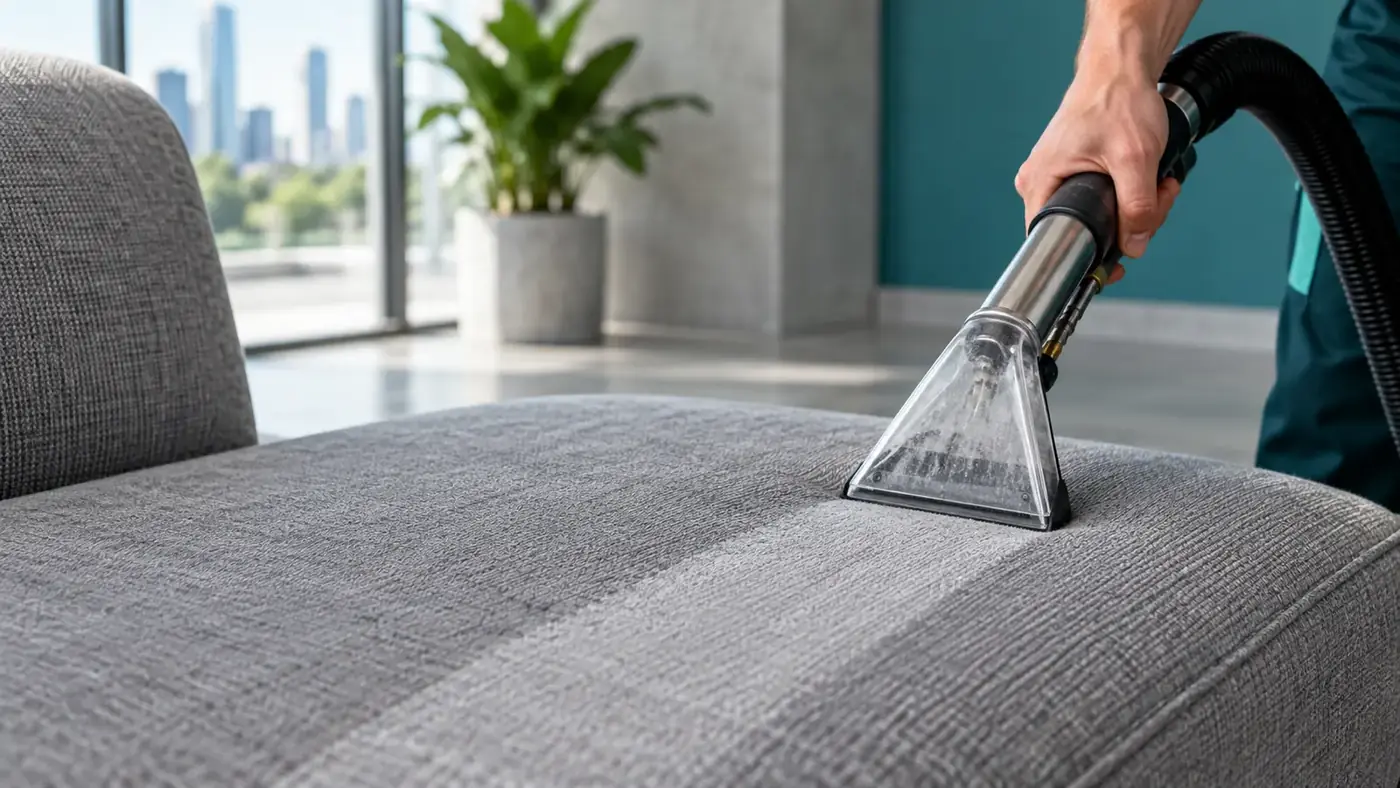
Upholstery steam cleaning, more accurately called hot water extraction, loosens soil with a pre-spray and gentle agitation, then flushes the fabric with warm rinse solution and immediately vacuums it back out. The dirt leaves in the recovery tank rather than being pushed deeper into the padding, and the fabric is left clean and only slightly damp.
- Pre-sprayA cleaning solution chosen for the fabric and the soil type is misted on and left to work for a few minutes. It does most of the loosening.
- AgitateA soft upholstery brush works the solution through the weave, lifting soil from the fibres without roughing up the surface.
- Rinse and extractA handheld tool sprays warm rinse solution and draws it back out in the same stroke. Slow, overlapping passes are followed by dry passes with no water.
- Groom and dryThe pile is brushed one way, cushions are stood up, and airflow is set up so the fabric dries evenly.
"Steam" is mostly a figure of speech. True steam vapour machines exist, but they are better at killing surface bacteria on hard surfaces than at removing soil from fabric. What professional cleaners use on upholstery is warm water under pressure, with strong vacuum recovery. The heat helps the cleaning chemistry work; the extraction is what takes the dirt away.
Rinse chemistry is the part people rarely hear about. Many pre-sprays are mildly alkaline because that breaks down body oils and food soils. Leaving that in the fabric makes it feel stiff and attracts new dirt, so the rinse brings the fabric back towards neutral. A good upholstery steam clean should leave fabric soft to the touch, not crunchy.
Extraction strength decides the result. A weak machine leaves more water behind, which means longer drying, a greater chance of water marks and a risk that dirt deep in the padding rises back to the surface. Commercial portable extractors with a dedicated upholstery tool, used with slow strokes and several dry passes, leave the fabric only damp.
Steam clean furniture upholstery before it is heavily soiled and the results are far better. Fabric that is cleaned once or twice a year keeps its colour and texture; fabric left for years may only partly recover, especially on arms and headrests where oils have oxidised and darkened.
Suitable fabrics
Which fabrics suit upholstery steam cleaning?
Most W-coded and W/S-coded fabrics suit it, which covers the majority of modern synthetic upholstery: polyester, nylon, olefin, acrylic and many blends. Natural fibres like cotton and linen can often be done with care. Viscose, rayon, silk and anything coded S or X should not be wet cleaned.
| Fibre | Steam clean? | Why |
|---|---|---|
| Polyester and nylon | Yes | Durable, colourfast, dry quickly |
| Olefin and acrylic | Yes | Water-resistant fibres that release soil well |
| Microfibre | Check the code | Some microfibres are W, others S; the tag decides |
| Cotton and linen | With care | Can brown or shrink if over-wet; low moisture, fast drying |
| Wool | With care | Wool-safe products, cooler water, no aggressive agitation |
| Viscose and rayon | No | Weak when wet, water-marks and shrinks easily |
| Silk and specialty weaves | No | Specialist dry methods only |
| Leather and vinyl | No | Cleaned by hand with surface-specific products |
The code on the tag is the starting point, not the whole story. A W-coded fabric can still bleed dye if it has been sun-damaged or previously cleaned with the wrong product, and a fabric with no tag at all is common on older or imported furniture. So every job starts with a test in a hidden area: the pre-spray and rinse applied, blotted with a white cloth, and checked for colour transfer and texture change.
Browning is the main risk on natural fibres. When cotton, linen or viscose blends are over-wet, moisture draws natural compounds from deep in the fibre and deposits them on the surface as the fabric dries, leaving yellow-brown patches. Keeping moisture low, drying fast and using an acidic rinse on those fabrics prevents it.
When steam cleaning isn't right, there are alternatives: a dry solvent clean for S-coded fabrics, a low-moisture method for delicate weaves, and hand cleaning and conditioning for leather. Each of those is explained in our guide to cleaning fabric and leather upholstery.

Realistic results
What will a steam clean remove, and what won't it fix?
It reliably removes dust, grit, body oils, most food and drink residue, and the dull grey film that builds up on busy seating. It usually lightens old stains rather than erasing them. It cannot reverse sun fading, worn or crushed pile, bleach marks or dye that has already bled.
The honest way to think about it: extraction removes what is sitting in or on the fibre. Anything that has changed the fibre itself stays. A coffee spill from last week will almost always come out. A coffee spill that someone scrubbed with a household spray six months ago may have set, and the best outcome is a lighter mark.
Odours follow the same rule. Smells from food, sweat and general use sit in the soil, so they leave with it. Smells that have soaked into the cushion foam, such as a large drink spill that went right through or pet urine, may need the cushion treated from inside, and sometimes the foam replaced. We tell you which situation you are in after the test clean, before the full job starts.
Ink, permanent marker, nail polish, red wine and rust each need their own spot treatment before the extraction pass. Some respond well, some partly. We name the likely outcome for each mark on the quote, so nobody is surprised afterwards.
Usually comes out
- Dust, crumbs and grit
- Hair and skin oils on arms and headrests
- Recent food and drink spills
- Everyday odour held in the soil
Stays, or only fades
- Sun fading and bleach marks
- Worn, shiny or crushed pile
- Set-in or heat-treated stains
Drying
How long does steam-cleaned upholstery take to dry?
Usually two to six hours, depending on the fabric, how thick the padding is, the temperature and above all the airflow. A warm, ventilated room with a fan dries fastest; a closed room on a cold, damp Melbourne winter day takes longest. Chairs done after close of business are usually ready for the next working day.
| Conditions | Typical drying time | Tip |
|---|---|---|
| Warm day, windows open | About 2 to 3 hours | Keep people off it until it is dry to the touch |
| Air conditioning or heating on | About 3 to 4 hours | Both remove moisture from the air |
| Fan pointed at the furniture | Cuts drying time noticeably | Move it around every hour |
| Cold, closed room in winter | 6 hours or more | Open a window or run a dehumidifier |
Airflow does more than heat. Moisture has to leave the fabric and then leave the room, and still air slows both. Better Health Channel's advice on mould and your health makes the same point about homes generally: mould needs damp, poorly ventilated conditions, and opening doors and windows is the simplest way to bring moisture down. Furniture that dries within hours in a ventilated room gives mould no chance.
Wicking is worth knowing about. Occasionally a spot that looked gone reappears as the fabric dries, because soil deep in the cushion travels up with the moisture and settles on the surface. It is more common with old spills and thick padding. A quick follow-up treatment usually fixes it, and it is one reason we ask you to tell us if anything reappears in the first day or two.
While it dries
- Keep people, pets and bags off it
- Leave cushions standing up
- Keep blocks under legs on timber and rugs
- Open a window or run a fan
- Brush the pile lightly once dry
Booking
How do you book an upholstery steam clean in Melbourne?
Send a photo of each piece and its fabric tag, a count of seats or chairs, and when the furniture needs to be usable again. We confirm whether steam cleaning suits the fabric, suggest an alternative if it doesn't, and send a fixed price with the timing that allows for drying.
- Photo and tagThe fabric code decides the method, so a photo of the tag saves a lot of guesswork.
- Method confirmedSteam, low-moisture or solvent, with a test on site before the full clean.
- Timed for dryingEvenings for offices, mornings for homes, so furniture is ready when you need it.
For offices, venues and anywhere with lots of matching chairs, we clean in batches and set up airflow as we go, so the first chairs are drying while the last are being cleaned. For homes, we work room by room and leave clear advice on how long before the lounge can be used.
Upholstery steam cleaning is the right choice for most fabric seating, but not all of it, and we would rather tell you that than risk your furniture. When you are ready, send photos for an upholstery steam cleaning quote.
Questions
What do people check before booking a steam clean?
The two questions that decide whether steam cleaning is right for a piece.
Is steam cleaning safe for all fabrics?
How long before we can sit on it?
Not sure if steam cleaning suits your fabric?
Send a photo of the tag. We will tell you the right method before quoting, and the price for it.